


Click to listen / follow on Apple Podcasts | Spotify Podcasts | Amazon Podcasts
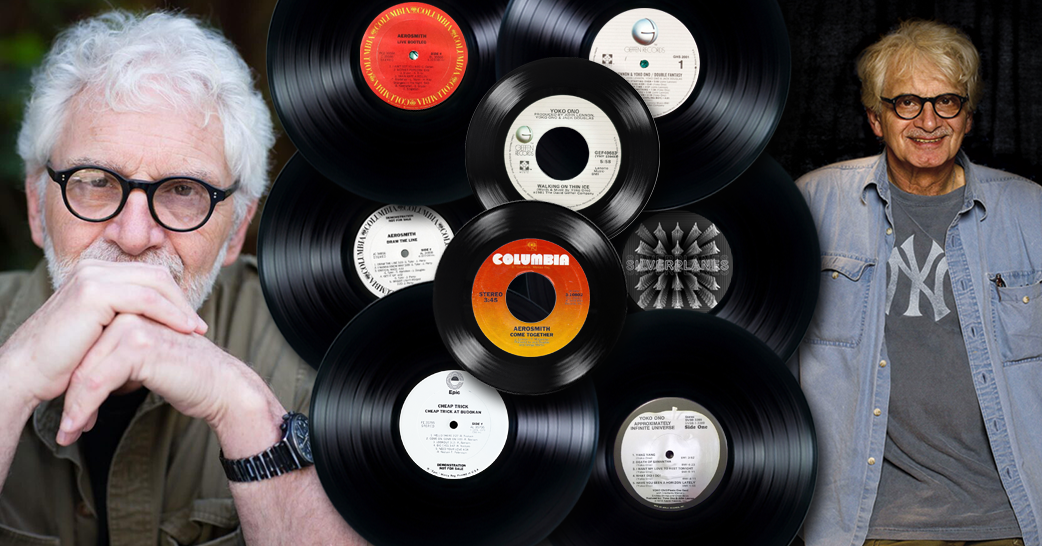
The legend himself Jack Douglas (1945-2026) shares stories from five decades of rock history — from producing John Lennon's final album to the memories Aerosmith, Cheap Trick, The Who, and his recent production of Silverplanes.
Topics Include:
Jack Douglas joins Nate from a snowy driveway, cigar in hand.
Silverplanes' debut album Airbus is finally releasing after years of delays.
Jack met Silverplanes' Aaron Smart through his college-age son.
Aaron turned out to own the Sunset Boulevard studio Jack had worked in.
Jeff Emerick mixed the album shortly before his sudden death in 2018.
The pandemic added two more years of delay to the release.
Jack and Aaron are now label partners with New York real estate billionaire Douglas Durst.
Their label operates 50/50 with artists — no standard royalty deals.
Signed artists include Robin Taylor Zander and the Detroit Youth Choir.
Jack builds songs from a single acoustic guitar performance first.
Aerosmith was different — built from the band groove up, lyrics last.
Walk This Way had no lyric until a Young Frankenstein gag unlocked it.
Jack started his career as a TV composer while janitoring at Record Plant.
He worked on sessions that became The Who's Who's Next.
Kit Lambert and Keith Moon were both, politely, out of their minds.
Jack survived eccentric clients by being reliably sober and crazy simultaneously.
John Lennon was the easiest artist Jack ever worked with.
John would say: "I'm the artist, you're the producer — let's work like that."
Jack engineered Imagine and stayed close to Lennon through the Lost Weekend years.
He was in and out of the Fame sessions with Lennon and Bowie.
John told Bowie: "I'm writing you the best hit you'll ever have."
John knew about — and liked — Aerosmith's cover of "Come Together."
George Martin gave Jack a flat in Kensington and a Morgan sportscar.
Jack helped produce Ringo's "Grow Old With Me," hiding Here Comes the Sun in the strings.
Double Fantasy was secretly recorded at Hit Factory, too far west for fans.
John wanted a middle-of-the-road record aimed at people aged 28 to 40.
Earl Slick was kept from rehearsals deliberately — a wildcard for fresh solos.
Rick Nielsen discovered John's Shea Stadium Rickenbacker with the setlist still taped on.
Rick later gifted John a custom all-white Rickenbacker, model 001, never cashed his check.
Cheap Trick's "I'm Losing You" session was thrilling but too edgy for the album.
Jack hid microphones throughout the sessions, gifting John cassettes on his birthday.
Jack destroyed the tape of the last day — John had sworn him to secrecy.
After John's murder, Jack and Yoko listened to vault tapes alone until dawn.
Yoko later sued Jack; Phil Spector's incoherent testimony and a wig mishap followed.
Jann Wenner called Jack a nobody — until Jack's lawyer read Wenner's own book aloud.
The jury was out ten minutes. Jack won millions.
The 2010 Stripped Down version was mixed in the exact same Record Plant room.
Live at Budokan was actually Osaka — Budokan tapes were too poorly recorded.
Jack rebuilt the Osaka drum kit using speaker-driven bass frequencies and filtered signals.
Aerosmith's Live Bootleg was sent back to Sony unchanged after Jack faked a remix session.
High resolution version of this podcast is available at: www.Patreon.com/VinylGuide
Apple: https://tinyurl.com/tvg-ios
Spotify: https://tinyurl.com/tvg-spot
Amazon Music: https://tinyurl.com/tvg-amazon
Support the show at Patreon.com/VinylGuide
How to listen to The Vinyl Guide
Listen & follow on Apple Podcasts or Spotify!
You can also SUPPORT OUR PODCAST by becoming a patron at Patreon.com/vinylguide !
About The Vinyl Guide
If you like records, just starting a collection or are an uber-nerd with a house-full of vinyl, this is the podcast for you. Nate Goyer is The Vinyl Guide and discusses all things music and record-related.